How Competitive TFT Is Structured
The competitive scene is built around a layered system that moves players from open qualification events into increasingly selective tournaments. Each stage is designed to test consistency, adaptability, and decision-making across multiple games rather than one-off performances.
Multi-Round Tournament Progression
Most TFT competitions are divided into multiple stages, typically spanning several days. Early rounds often feature larger player pools, where participants compete across a set number of games. As the tournament progresses, the field narrows based on cumulative points.
Point Systems and Scoring Logic
Scoring in TFT tournaments is designed to reflect placement within each game. Higher placements yield more points, while lower finishes provide minimal or no contribution to a player’s total score. Over multiple rounds, this creates a performance curve where consistency often outperforms volatility.
Tournament Tiers and Competitive Pathways
The ecosystem is divided into tiers that represent different levels of competition. These tiers are not just about skill level but also about how players qualify and what is at stake in each event.
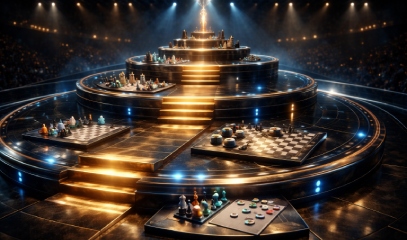
Entry-Level Competitive Circuits
Lower-tier tournaments serve as the foundation of the competitive ecosystem. These events are often more accessible and allow a wider range of players to participate. They act as both a proving ground and a filtering mechanism.

Mid-Tier Events and Progression Systems
Mid-tier tournaments introduce a higher level of competition and more structured qualification criteria. Players who reach this stage have typically proven their ability to perform consistently under tournament conditions.

Regional Finals and Qualification Events
At the top of the competitive ladder are regional finals, where the strongest players compete for qualification into global events. These tournaments carry higher stakes and require sustained high-level performance across all rounds.
Alternative Formats and Seasonal Events
In addition to standard tournaments, the TFT competitive scene includes experimental formats and mid-season events. These competitions test different structures and introduce variation into the ecosystem.

Experimental Tournament Structures
Some events deviate from traditional formats by introducing unique scoring systems or alternative progression models. These formats can emphasize different aspects of gameplay, such as adaptability or high-risk strategies.

Mid-Season Events and Meta Shifts
Mid-set competitions play an important role in shaping the competitive landscape. These events occur when balance changes or new mechanics are introduced, forcing players to quickly adapt to evolving strategies.
Understanding the Competitive Landscape
Played TFT at a competitive level is structured in layers, point systems and trivial formats with all terms that grow out of a game itself. Play unfolds along a progression-of-silver that rewards continuity, adaptability, and strategic thinking in scope. From grass root gaming circuits all the way to regional finals, competition embodiments are staging something fundamentally new each session and with a higher degree of expectations.
Under such circumstances, although individual game skills seem important, the successful players have recently needed to be able to deliver across a number of games, to be comfortable with conditions, to move on from multiple levels of tournament complexity.
I think it's kind of depressing that the very top selling Real Time Strategy games of all time are still Age of Empires 2 (1999) and StarCraft (1998).
— Sandy Petersen 🪔 (@SandyofCthulhu) December 1, 2025
Has there been no huge improvements in real time strategy in 26 years? pic.twitter.com/lllV9zcBSU